There's a specific kind of tired that feels great. Your legs are heavy. Your hair has given up. Someone has dirt on their face and doesn't know it yet. And the joke that stopped being funny hours ago is somehow still landing.
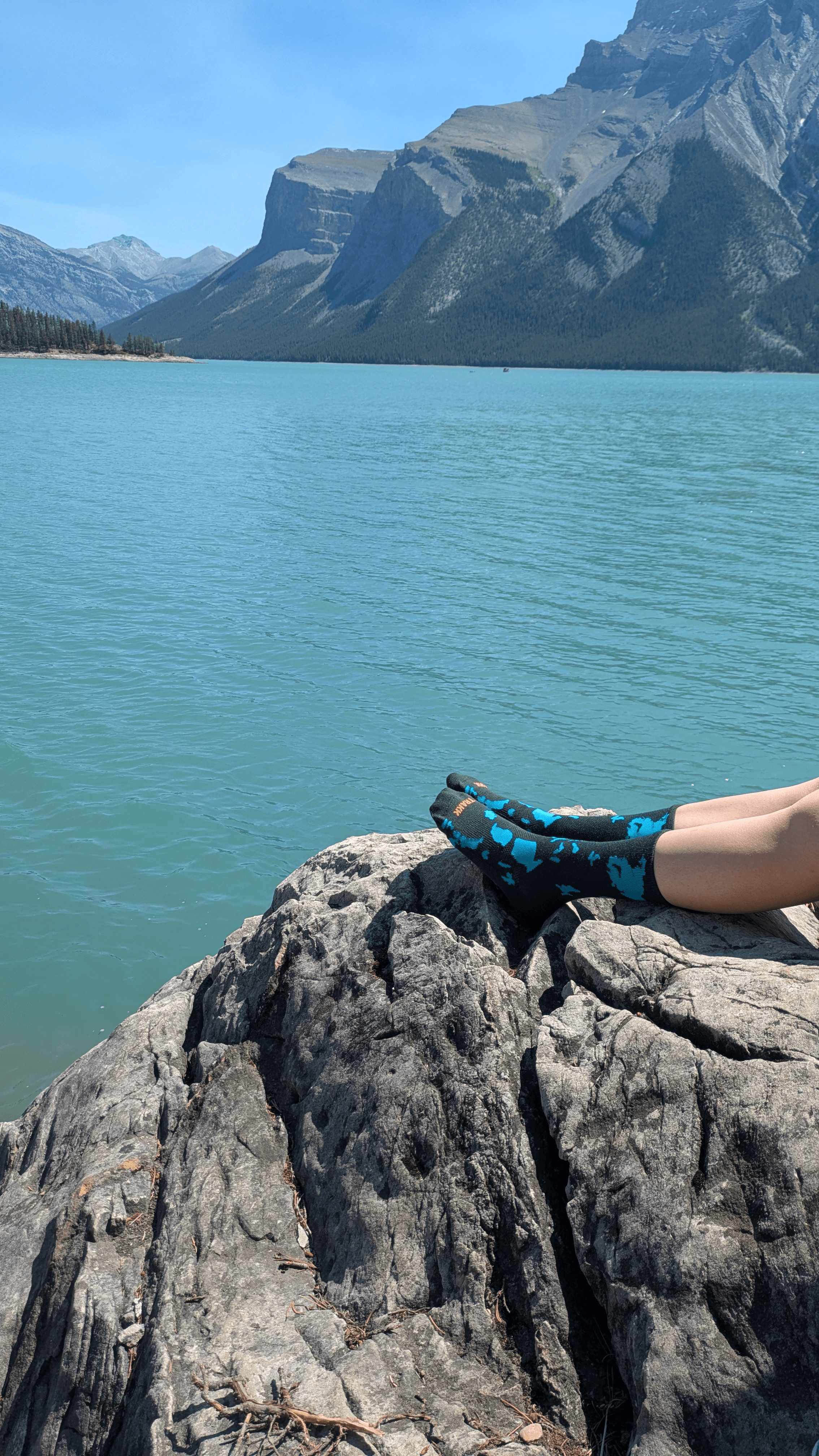
That's the feeling at the end of a big day outside. Maybe you hiked farther than planned, ran a trail, paddled a lake, or just wandered around all day with people you love. You're tired, but not empty. You feel full.
That feeling is a big part of what TRAKK is built around. And it turns out there's real science behind why days like that feel so good.
Nature helps your head settle
Modern life asks a lot of your attention. Messages, traffic, screens, tabs on tabs on tabs. Time outside seems to give your brain a gentler kind of input.
A 2021 review of 50 studies found that nature-based activities were linked to better mood and less anxiety (Coventry et al., 2021). A 2023 review of 92 "nature prescription" studies found similar improvements, plus lower blood pressure and more daily steps (Nguyen et al., 2023). One small study even found people's stress hormone dropped after time outside, with 20 to 30 minutes being the sweet spot (Hunter et al., 2019).
You don't need to start timing your walks. But the urge to get outside when your head feels full might have something real behind it.
Movement does a lot of the work too
Most outdoor time also means moving. Walking, hiking, running, climbing, paddling, or hauling too much camping gear from the car.
The benefits of moving are well established. The World Health Organization suggests adults aim for at least 150 minutes of moderate activity a week, and the CDC notes that being active can improve sleep and ease anxiety (WHO, 2024; CDC, 2025).
The nice part about the outdoors is that movement stops feeling like a chore. You're not getting your steps in. You're trying to see what's around the next bend.
It might change how you think, too
Researchers have long studied whether nature gives tired attention a break. The results are mixed but promising (Ohly et al., 2016; Bell et al., 2025). One of the more fun studies sent 56 backpackers into the wild for four days with no devices. The group tested afterward scored about 50% higher on a creative problem-solving task (Atchley et al., 2012). They couldn't separate nature from the exercise or the break from screens, which might be the whole point.
And then there are the people
Nature makes the setting. People make the story.
The evidence on connection is some of the strongest here. A big review of 148 studies and over 300,000 people found that those with stronger social ties had about a 50% better chance of survival over time (Holt-Lunstad et al., 2010). In 2025, the World Health Organization reported that loneliness now affects about one in six people worldwide (WHO, 2025).
This is where outdoor days shine. A hike gives you hours next to someone with no agenda. A camping trip gives you small jobs, bad coffee, and stories you'll retell for years. You're not sitting across from each other trying to connect. You're doing something together, and the connection just happens (Eigenschenk et al., 2019; Marselle et al., 2013).
You don't need an expedition
Good news: none of this means summiting a mountain before breakfast.
One study of nearly 20,000 people found that spending about 120 minutes a week in nature was linked to better health and wellbeing, and it didn't matter if you got there in one trip or a few short ones (White et al., 2019).
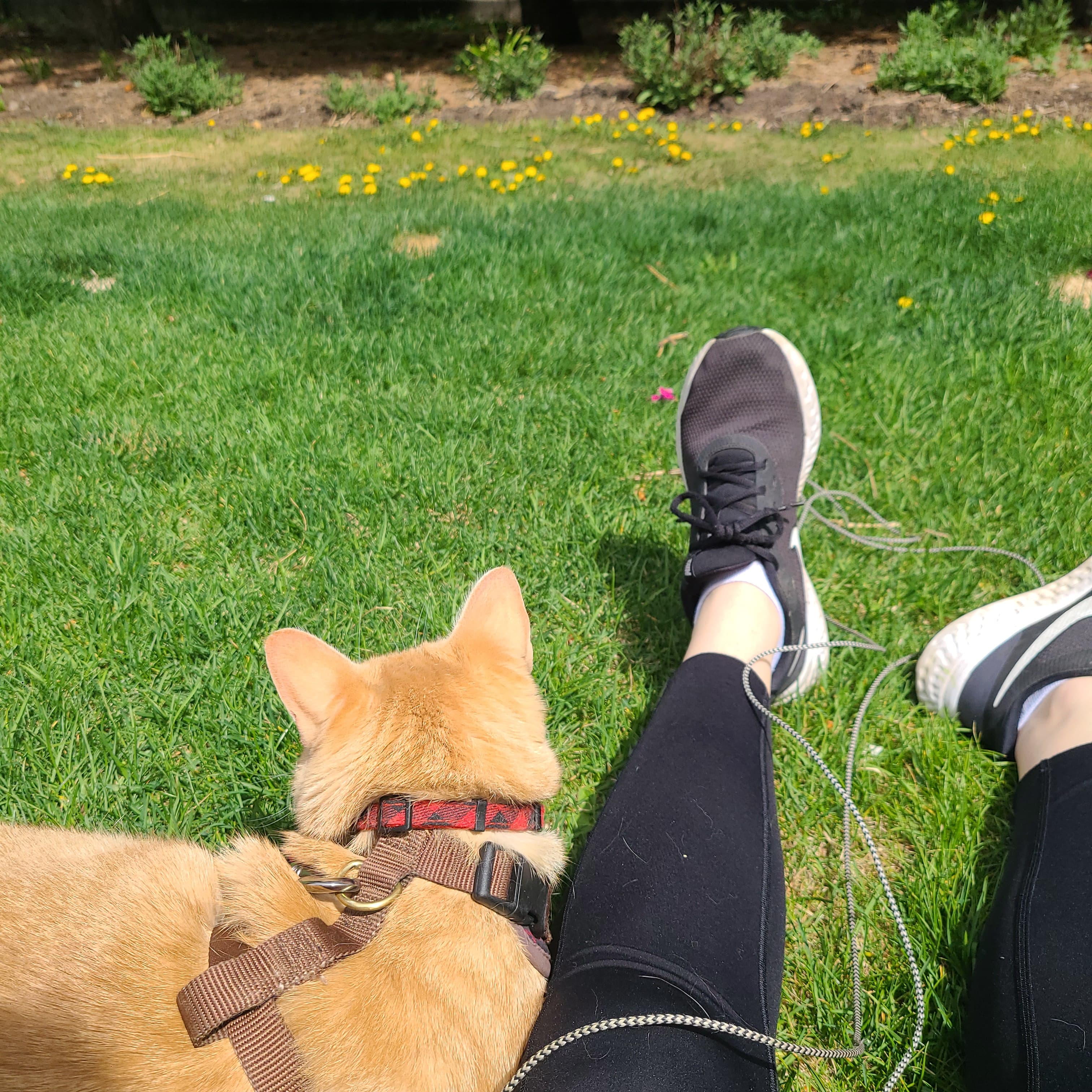
So take the long way. Walk the ravine after work. Bring coffee to a lake. Take the kids somewhere muddy. Send the group chat invite instead of waiting for someone else to. Sit outside long enough that everyone stops checking their phone.
This is the kind of day TRAKK is made for
TRAKK started with a place: the lakes and ponds of Elk Island National Park, close to Edmonton, learned by running and hiking its trails.
We make merino socks because good gear helps you stay out a little longer. Comfy feet can't fix your mood or make you friends. Socks are still socks. But they can take away one small reason to turn around.
And a good life is often built exactly like that. Small frictions removed, doors opened, people invited, kilometres added, until the sun's getting low, everyone's hungry, and your legs are promising that tomorrow will be interesting.
That's a pretty good way to land on your feet.
A quick note on the science: most of these findings come from observational studies and reviews, so they show links, not guarantees. Getting outside won't fix everything. But the pattern is consistent enough to take seriously.
Sources
- Coventry et al. (2021). SSM – Population Health. https://doi.org/10.1016/j.ssmph.2021.100934
- Nguyen et al. (2023). The Lancet Planetary Health. https://doi.org/10.1016/S2542-5196(23)00025-6
- Hunter et al. (2019). Frontiers in Psychology. https://doi.org/10.3389/fpsyg.2019.00722
- Ohly et al. (2016). Journal of Toxicology and Environmental Health, Part B. https://doi.org/10.1080/10937404.2016.1196155
- Bell et al. (2025). Journal of Environmental Psychology. https://doi.org/10.1016/j.jenvp.2025.102632
- Atchley et al. (2012). PLoS ONE. https://doi.org/10.1371/journal.pone.0051474
- WHO (2024). Physical activity. https://www.who.int/news-room/fact-sheets/detail/physical-activity
- CDC (2025). Benefits of Physical Activity. https://www.cdc.gov/physical-activity-basics/benefits/index.html
- Holt-Lunstad et al. (2010). PLoS Medicine. https://doi.org/10.1371/journal.pmed.1000316
- WHO (2025). Social connection linked to improved health. https://www.who.int/news/item/30-06-2025-social-connection-linked-to-improved-heath-and-reduced-risk-of-early-death
- Eigenschenk et al. (2019). IJERPH. https://doi.org/10.3390/ijerph16060937
- Marselle et al. (2013). IJERPH. https://doi.org/10.3390/ijerph10115603
- White et al. (2019). Scientific Reports. https://doi.org/10.1038/s41598-019-44097-3